

Photo essay
Inside a Japanese New-Build
You have seen the exterior photographs. This is what the inside of a modern Japanese house is actually like — room by room, and why it is arranged the way it is.
The short answer
A new detached house in Kansai at around ¥85 million gives you roughly 118 m² on freehold land, built to the highest seismic grade with insulation above the cold-region standard. What surprises overseas buyers is not the size but the arrangement: shoes come off at a sunken entrance, the kitchen sits in the middle, and the living room is designed to open onto a garden.
You take your shoes off, and the house begins
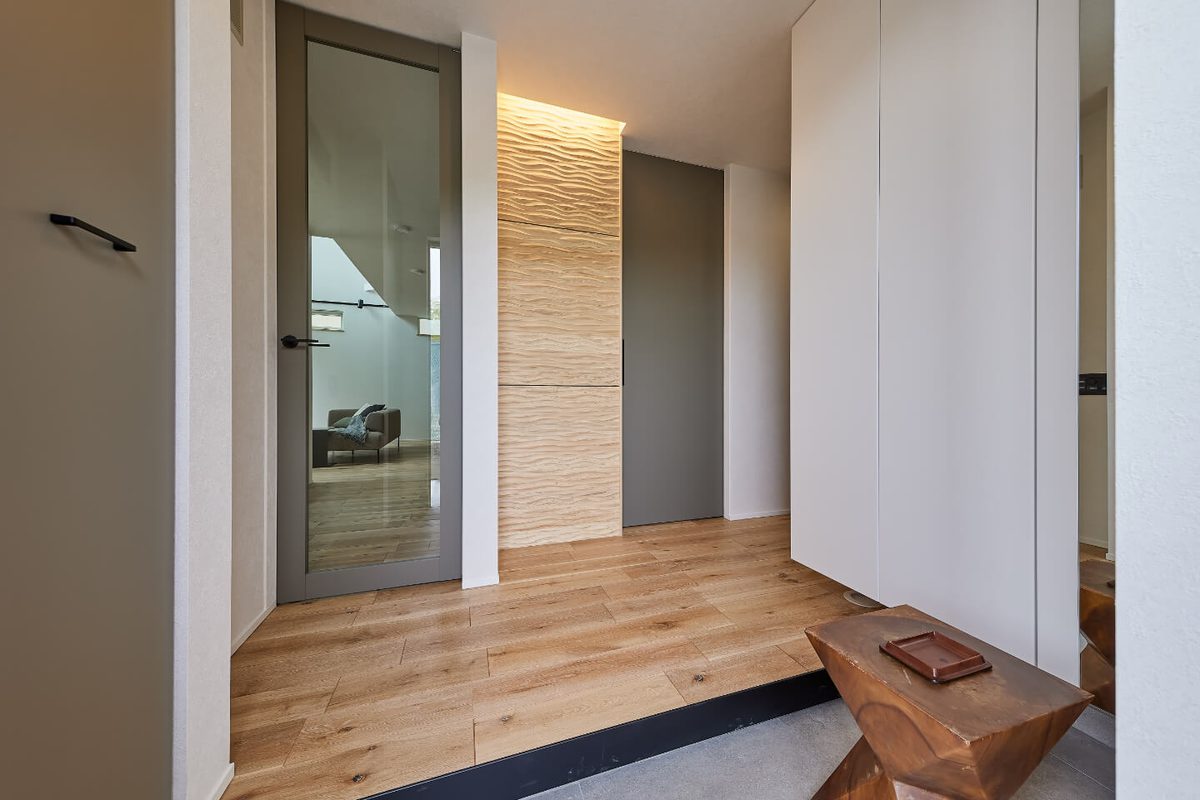
Every Japanese home has a genkan — a sunken entrance floor, one step below the rest of the house. You step out of your shoes there, step up, and you are inside. The step is not decorative. It is the line between outside and inside, and nobody crosses it in shoes.
Because of it, floors stay clean enough to sit on. That single habit shapes everything that follows: the flooring, the furniture heights, the fact that children play on the floor rather than on sofas.
The step at the entrance is the reason Japanese floors are treated as furniture. Plan for shoe storage — most homes have a cupboard beside the genkan.
The living room is built to open
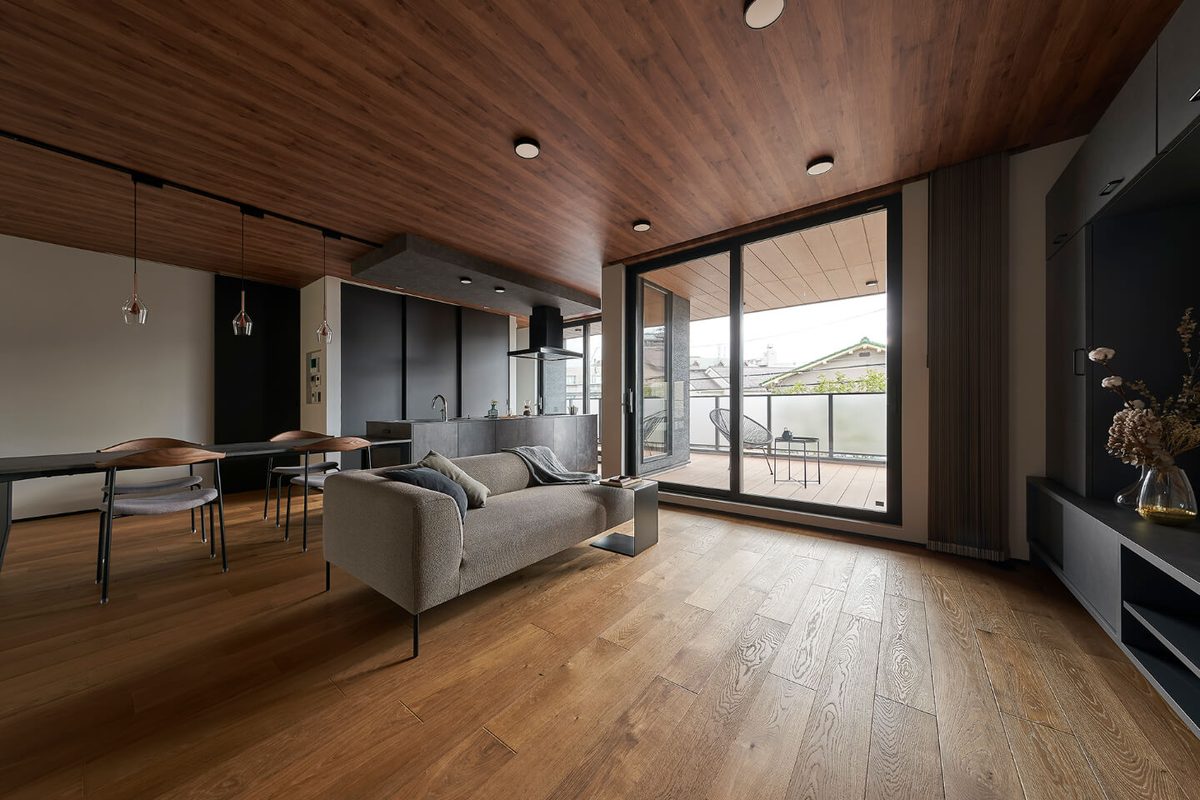
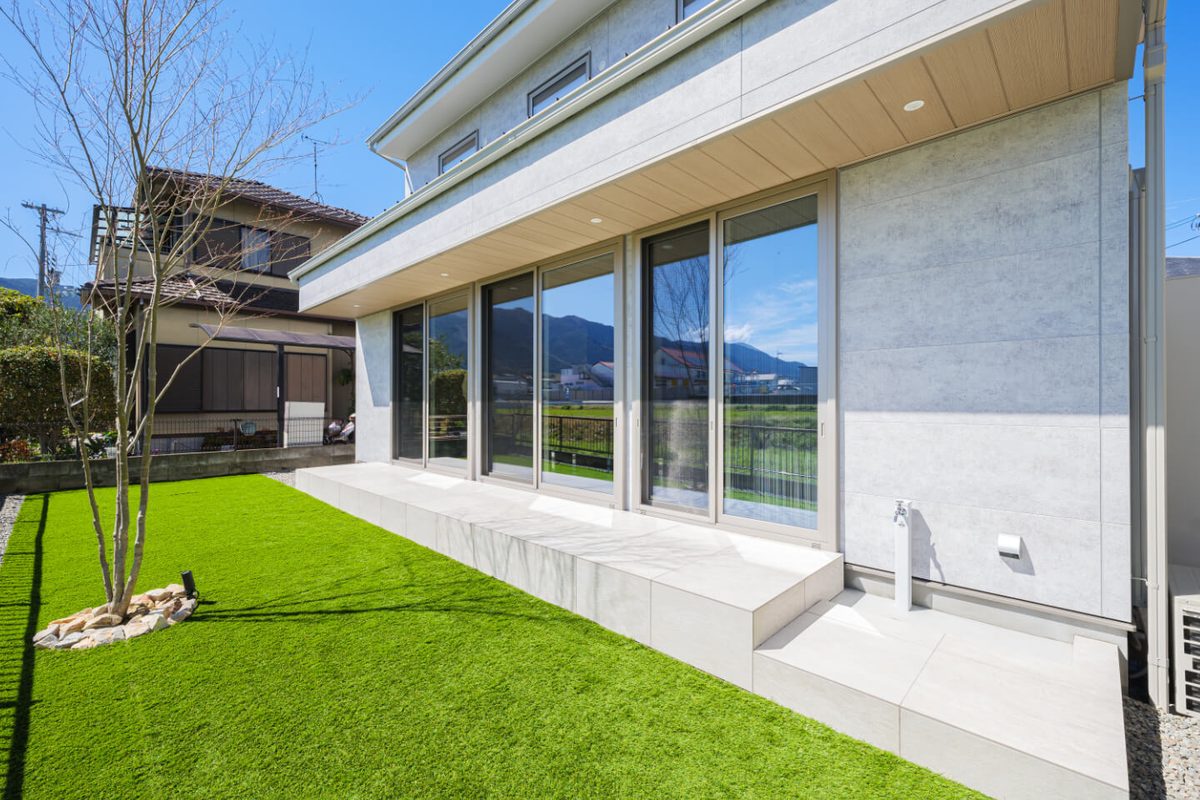
A Japanese living room is usually designed around one long wall of glass facing the garden. It is not a window in the European sense; it is closer to a movable wall. In good weather the whole face of the room opens.
This is why gardens here are small but intensely designed. You are not meant to walk in the garden so much as to look at it from inside, all year, as it changes.
The kitchen is in the middle, not at the end
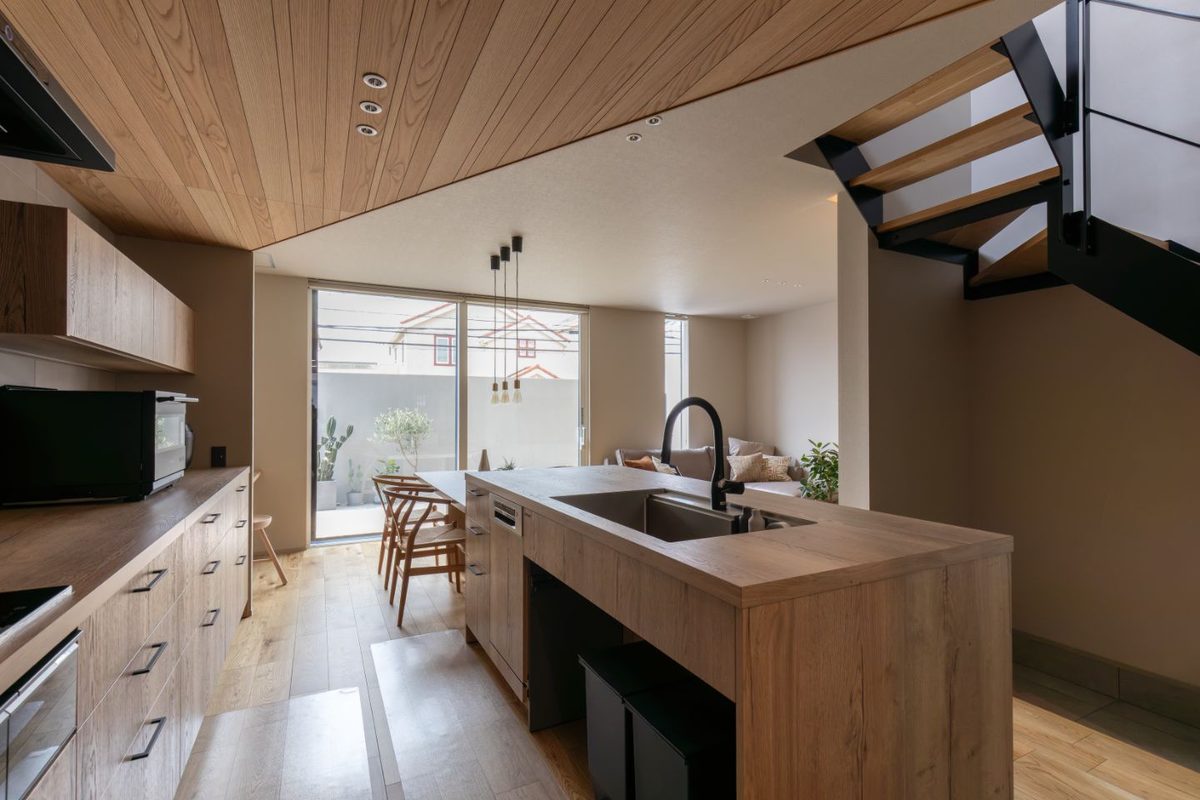
In most new Japanese homes the kitchen faces into the living room rather than away from it, usually as an island or a peninsula. The person cooking is in the room with everyone else.
Storage is dense and hidden — a walk-in pantry behind the kitchen is now close to standard. Appliances are built in. The visible surface is kept deliberately clear.
Washing, drying and putting away happen in one line
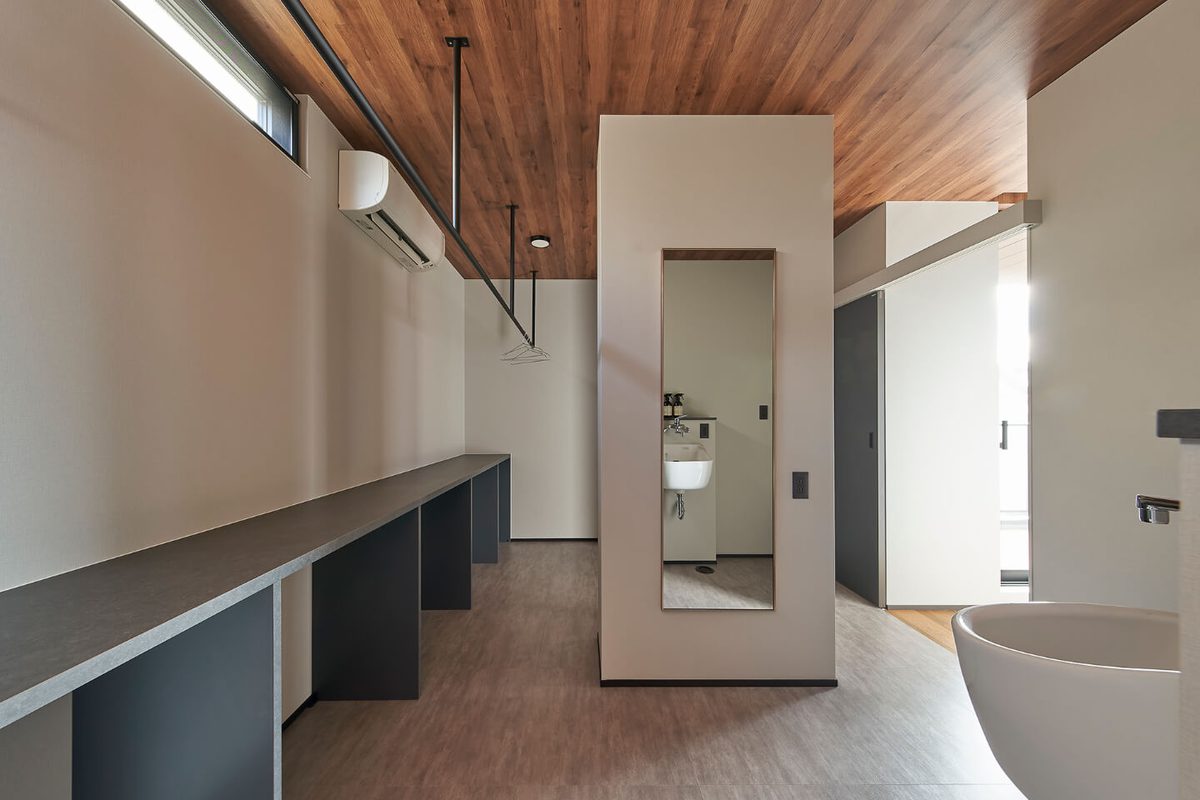
This is the part of a Japanese house that overseas visitors notice last and appreciate most. The washbasin, the laundry, the drying space and the wardrobe are arranged in a single connected run, so the laundry never crosses the house.
Builders call it a kaiyu dosen — a circular household route. It is designed rather than inherited, and it is one of the clearest differences from an older house.
Ask to see the laundry route when you view a house. In a well-planned Japanese home it is a straight line; in a poorly planned one you will be carrying wet washing up a staircase.
The bathroom is a room, not a cubicle
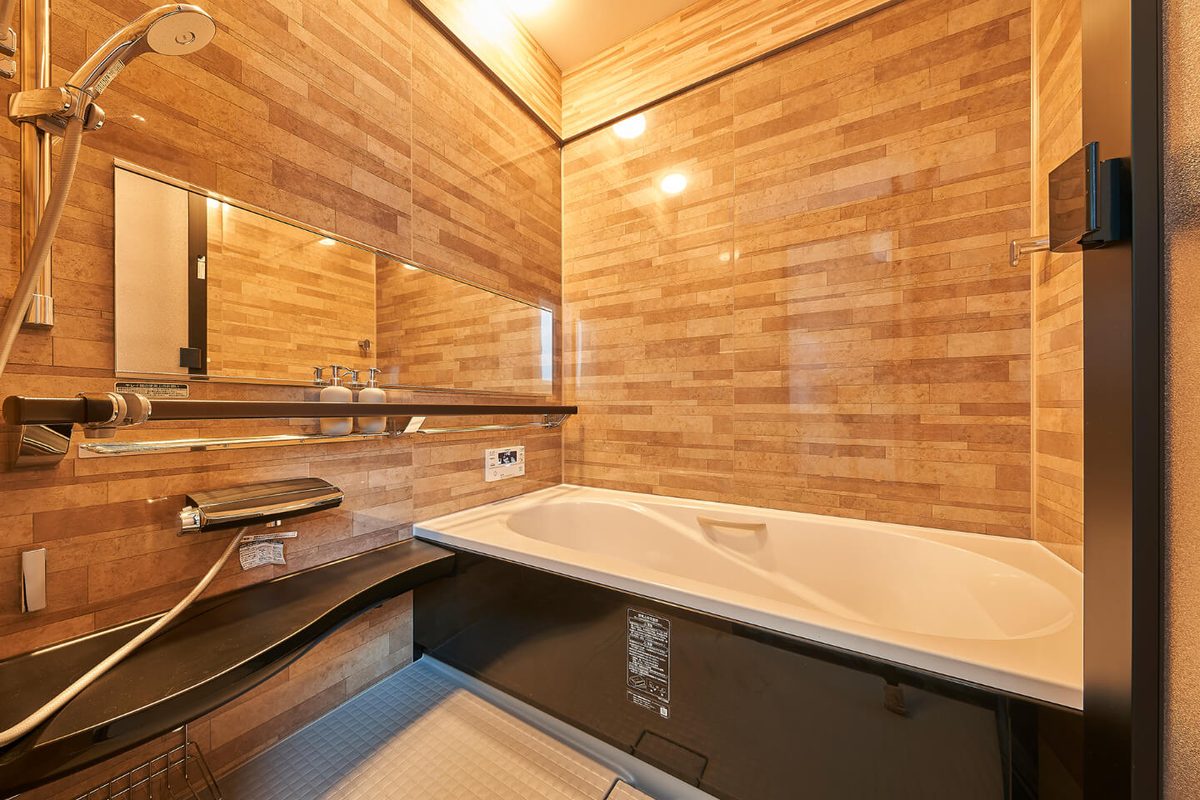
The Japanese bathroom is two spaces: a changing and washing room with the basin, and beyond it a sealed wet room containing a shower and a deep soaking tub. You wash outside the tub and then get in to soak. The water stays clean, so a household shares it.
The tub is deeper and shorter than a Western bath, and it reheats itself. Many are lined in timber or stone.
One room still has tatami
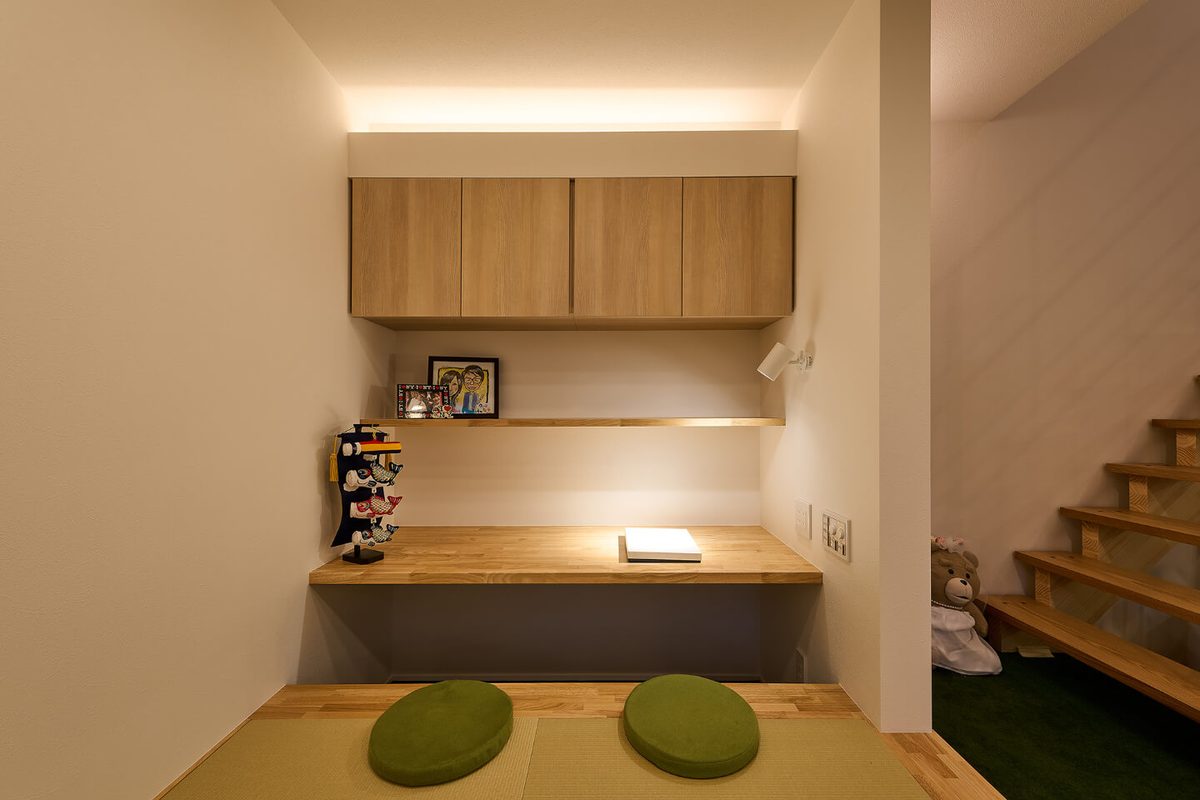
Even in a thoroughly modern house, one room is usually laid with tatami — thick woven mats of rush over a rice-straw or board core. It smells of grass when new.
It is the most flexible room in the house. A place to fold laundry, to put a guest, to let a baby sleep on the floor next to where you are working. It is often slightly raised, with drawers underneath.
Ceilings and stairs do the work that walls do elsewhere
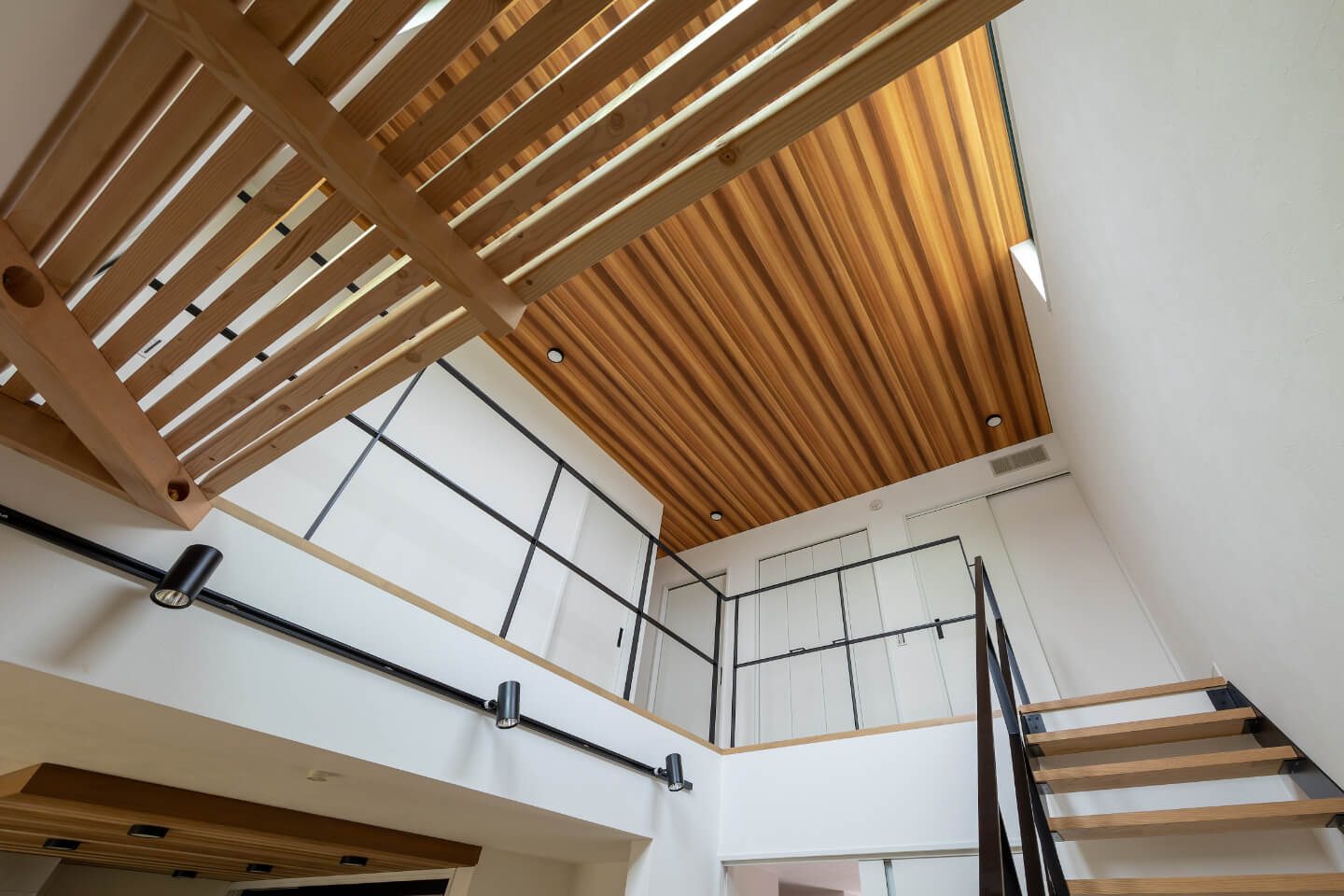
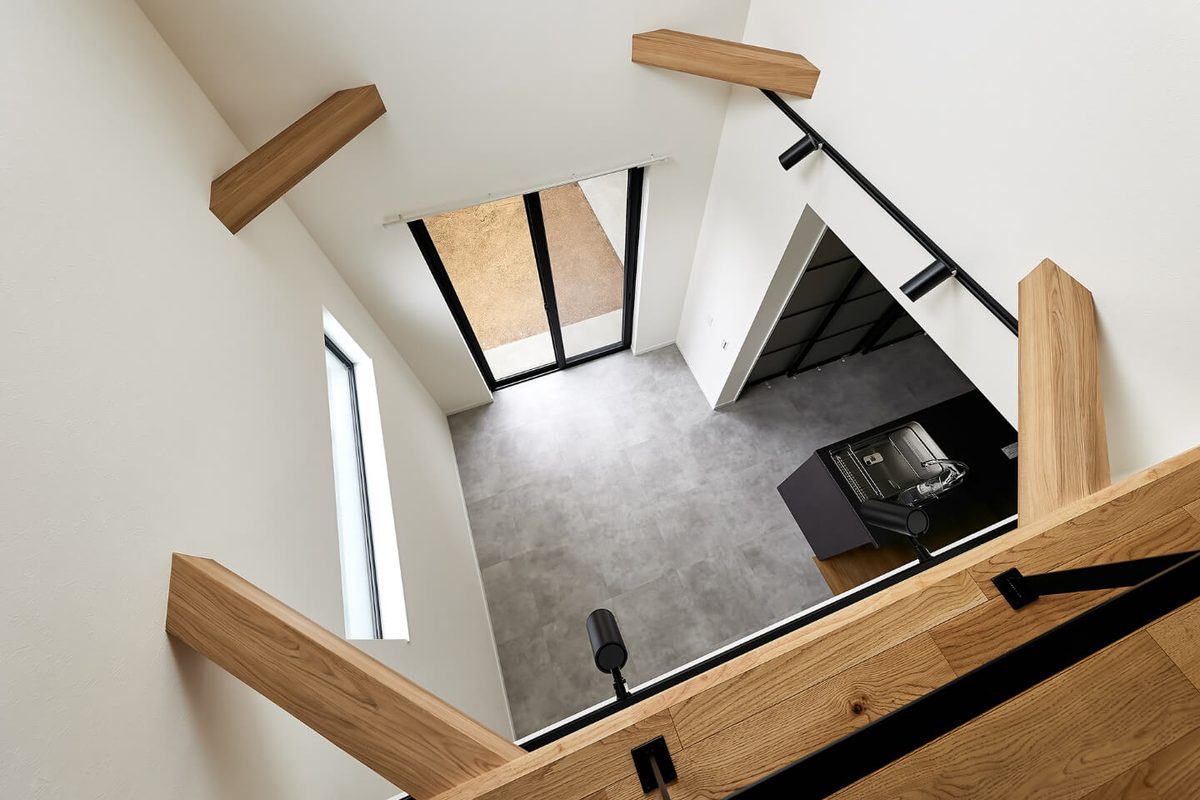
Japanese houses are not large, so height is used instead of floor area. A double-height space over the living room, a stair that is open rather than boxed in, a skylight where a landing would otherwise be dark.
Ceilings are often finished in timber, which is why rooms photograph warmer than their size suggests. The material is doing the work that a bigger room would do.
From outside, the house looks small
The last thing to understand is the street. Plots in Kansai suburbs are compact and close together, and the front of a house is usually restrained — the design faces inward, toward the garden and the light well, not toward the road.
A house that looks modest from the street can be generous inside. Judging a Japanese home from its exterior photograph is the most common mistake an overseas buyer makes.
If a listing shows only the exterior, ask for the interior and the plan. The exterior tells you the least about a Japanese house.
Common questions
- Is 118 m² small for a family?
- It is a normal family size in Japan and is planned to feel larger — storage is built in, ceilings are used, and rooms borrow space from each other. Come and stand in one before deciding from the number alone.
- Can I wear shoes indoors if I want to?
- You can, but the floors are not built for it and neither is the entrance. Almost every visitor, tradesperson and delivery follows the convention, so in practice you would be working against the house.
- Are these houses cold in winter?
- Older ones can be. Recent ones are not: insulation values and airtightness are measured and published, and a modern Kansai house with UA 0.4 holds heat well. Ask for the figures rather than assuming.
- Do all new houses have a tatami room?
- Not all, but most detached houses still include one, often off the living room. If you do not want it, it is one of the easier things to change at the design stage.
- Are these the homes you are selling?
- No. The photographs here are completed homes built by G-House, shown so you can see how these houses are made. Our current listings are on the properties page.
Come and stand in one
Photographs are useful up to a point, and then they stop. The things that decide whether a house suits you — the height of the ceiling over the sofa, how far the kitchen is from the front door, how much light reaches the back of the room in December — are not visible in an image.
We can walk you through a house on video, in English, Japanese or Chinese, and answer as we go. Tell us what you are looking for.
This article is general information, not legal or tax advice. Confirm your own circumstances with a professional in Japan and in your country of residence. Accurate as of the date shown.